


Search Results

Building a Hybrid Next.js and Plasmic Marketing Platform Without Sacrificing Control
A hybrid Next.js architecture can give marketers visual publishing autonomy in Plasmic while preserving the engineering guardrails needed for custom routes, SEO, caching, and reliable production releases.

Exploring GraphQL in Magento: Unlocking the Full Potential of Headless Architecture
Learn about GraphQL and why it is useful for Magento 2 developers. Discover the requirements and steps involved in using GraphQL in Magento 2.

Wordpress Custom Post Types
Wordpress is an open source content management system that allows developers to create a wide array of plug-ins, themes and widgets. One of the core pieces in Wordpress is creating Custom Post Types. A Custom Post Type is an easy way to organize and create data that is stored in the database.

How to Add CI Test Coverage to a Symfony Integration Middleware Without Losing Local Debugging
When a Symfony middleware sits between your storefront and your ERP or order systems, every change carries cross-system risk. Here is how to collect fast coverage in CI with PCOV, publish JUnit and Cobertura reports, and keep Xdebug available for local debugging.

The Customer Journey Series Pt 2 - How to Find a Software Development Company?
This is part two of our Customer Journey Series - How to find a Software Development Company. Here's some steps to finding your best option.

Importance of Software Code Standards for Your Software Project
Learn why Software Code Standards are important for your next software project. Understanding the reason, importance, & need.
Single Sign On Authentication Using a Symfony Framework
Single Sign-On can eliminate friction in the user experience and can be implemented via a Symfony framework for user authentication between websites.

The Signal Is the Campaign: A Case for Headless ABM
Account-based marketing has always run on campaigns: plan, build, launch, measure. But buyer intent doesn't wait for a launch date, and the gap between signal and response is where most programs quietly lose return. This piece makes the case for headless ABM, an architecture where the signal itself triggers the response, and argues that closing that gap could be the most meaningful conversion unlock ABM has seen in years.

Verifiable Tenant Provisioning for AI Commerce: Beyond “Deployment Succeeded”
A successful configuration upsert does not prove that an AI commerce tenant is truly ready. This article explains how deployment manifests, safe secret reporting, and remote verification create a trustworthy provisioning workflow for Shopify catalog chat.

Magento-to-Shopify Migration Cost: 2026 Scope Guide
Magento-to-Shopify migration cost in 2026 depends on data, custom behavior, integrations, B2B workflows, testing, and launch risk. Learn how to scope it.

Can an AI agent work with business software that has no API?
AI agent integration without API is possible through files, database access, or screen automation. Compare tradeoffs and plan safe, verified business workflows.
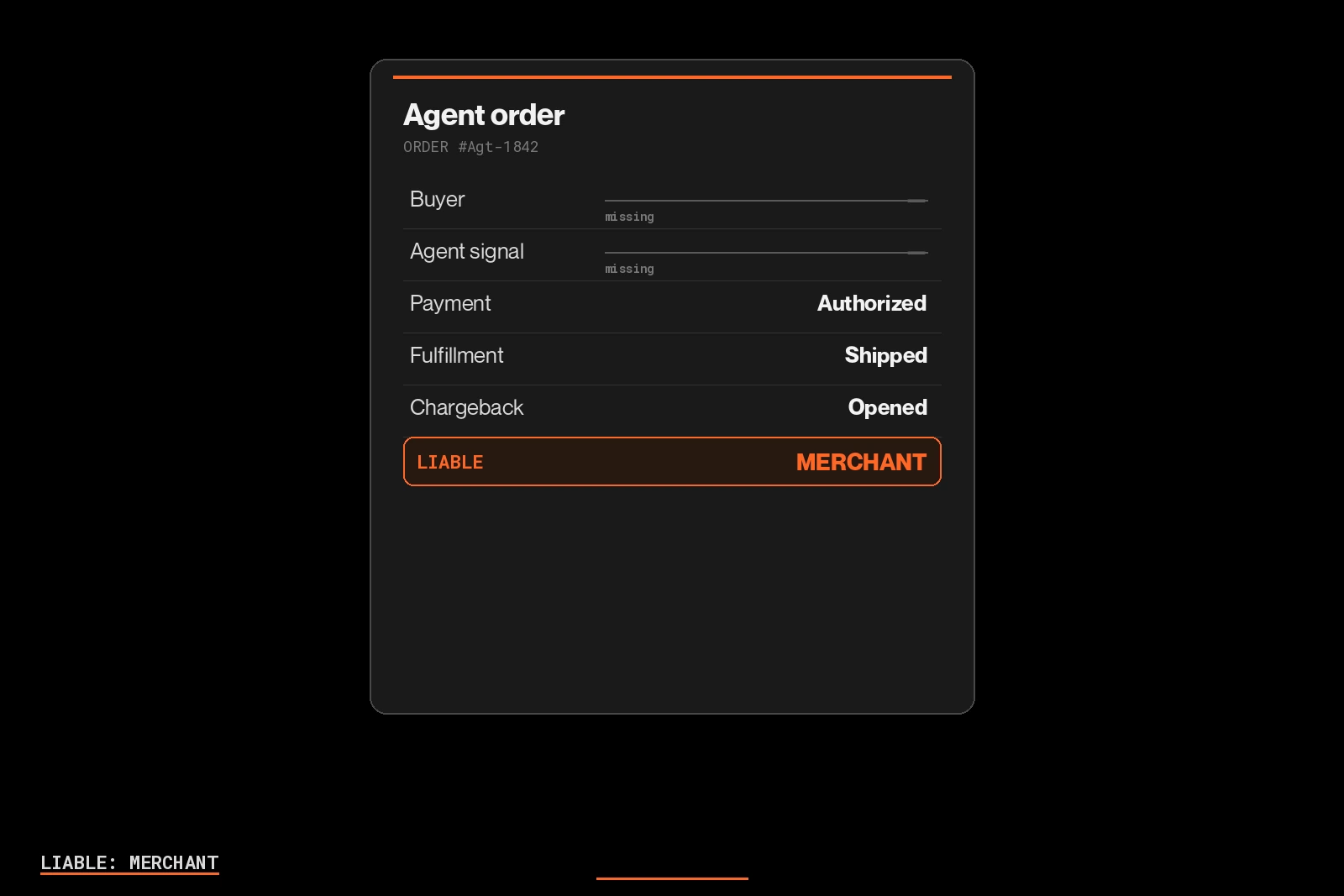
Who Pays for Fraud When an AI Agent Places the Order?
When an AI agent buys for a shopper, the merchant still carries most fraud risk and loses the device and behavior signals fraud tools rely on. Here's who is liable, how detection has to change, and how card networks, Stripe, Google and Shopify are rebuilding fraud controls for agent orders.