




Skip to content
Ecommerce Platform Migration & Replatforming

Migrate to Shopify Without the Free Fall

Platform migrations from Magento, Salesforce Commerce Cloud, WooCommerce, nopCommerce, and other suites to Shopify—catalog, customer, order, SEO, and ERP/STORIS continuity planned in phases instead of a single risky flip.
When Migration Help Fits

When the cost of staying exceeds the cost of moving, if done safely.

Platform limits, vendor sunset, or total cost drive replatforms. The risk is in data, SEO, integrations, and cutover timing.

Catalog complexity

Attributes, bundles, and pricing rules don't map one-to-one.

Customer & order history

Retention, compliance, and support need continuity.

Integration spaghetti

ERP, OMS, tax, and marketing systems need a new seam plan.

SEO & URL continuity

Redirects, sitemaps, and structured data can't be an afterthought.

Operational rehearsal

Customer service and fulfillment need dry runs on realistic data.

Rollback reality

Know what "pause" means when orders are in flight.
Cutover Discipline

Migrations treated like product launches.

Phased loads, reconciliation, and war-room readiness are structured so launch day runs on planning, not improvisation.
bp client logo
brandjump client logo
coco client logo
conduit client logo
cpesr client logo
current client logo
csun client logo
fhf client logo
hdb client logo
isc client logo
bp client logo
brandjump client logo
coco client logo
conduit client logo
cpesr client logo
current client logo
csun client logo
fhf client logo
hdb client logo
isc client logo

Senior-led delivery

Architecture and engineering leads stay on the program after the pitch—not a bait-and-switch staffing model.

Migration discipline

Idempotent jobs, reconciliation, acceptance criteria per entity, and cutover playbooks before anyone names a go-live date.

STORIS + Shopify depth

Specialty proof when STORIS stays in the loop—programs where Shopify and STORIS stay honest through catalog and fulfillment complexity.
How We De-Risk

Inventory, map, migrate in waves, validate, cut.

We define acceptance tests per entity and per integration before anyone names a go-live date.

Discovery & mapping

Entities, volumes, and business rules documented.

ETL & tooling

Idempotent jobs, checkpoints, and diff reporting.

Parallel running

Shadow reads or limited pilots to flush issues.

Go-live playbook

Freeze windows, comms, on-call, and rollback triggers.
Relevant Work

Replatform and migration references.

Platform migrations selected for data integrity, timeline discipline, and post-launch stability.
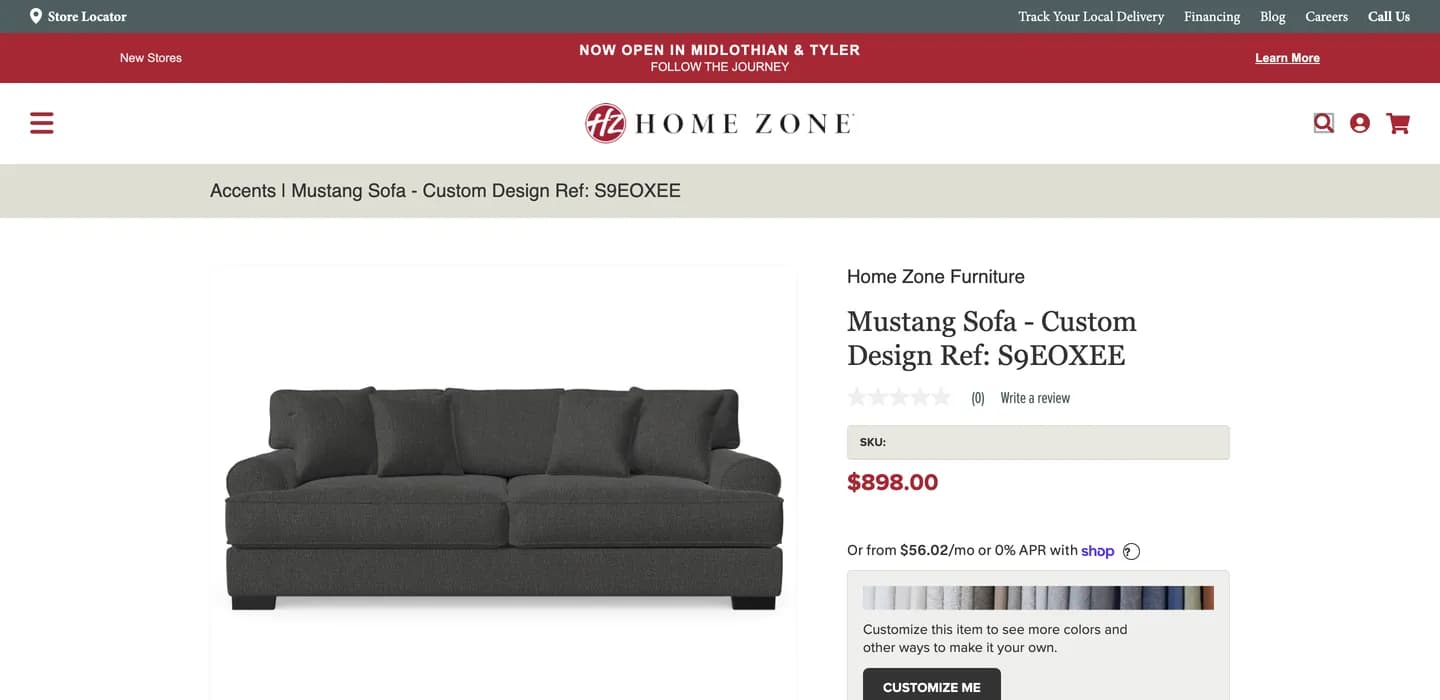
Home Zone Furniture: Migrating from NopCommerce to Shopify with Integrated STORIS Inventory
Furniture Retail - Ecommerce

Home Zone Furniture: Migrating from NopCommerce to Shopify with Integrated STORIS Inventory

Endertech partnered with Home Zone Furniture, a Texas-based furniture retailer, to migrate from a legacy nopCommerce/eSTORIS setup to Shopify. By integrating STORIS for inventory and orders, re-architecting the catalog around variants, and modernizing UX and marketing integrations, we helped the client gain better control over their ecommerce channel and support broader, nationwide sales.
Source → Shopify Paths

Legacy suites as sources. Shopify as the destination.

Adobe Commerce / Magento, Salesforce Commerce Cloud (SFCC) / Demandware, WooCommerce, and nopCommerce are common source platforms—we map catalog truth and integrations into Shopify.

nopCommerce → Shopify

Dedicated nopCommerce exit—catalog mapping, SEO continuity, and STORIS when that ERP stays in the loop.

Magento → Shopify

Adobe Commerce / Magento catalog, B2B rules, and SEO continuity on the way to Shopify.

WooCommerce → Shopify

WordPress/Woo catalog, plugins, and SEO continuity on the way to Shopify.

SFCC → Shopify

Salesforce Commerce Cloud, SFCC, and Demandware exits for multi-store retail moving to Shopify.

Shopify & Hydrogen

The destination platform—Online Store and headless Hydrogen paths where storefront freedom matters.

Integration rebuild

Middleware, events, and API contracts on Shopify as the new commerce core.
Related Solutions

Ecommerce pillar hub and vertical programs.

Migration programs connect to the ecommerce development practice and specialty retail paths.

Ecommerce development services

Shopify, migrations, integrations, and omnichannel programs—the ecommerce pillar hub for retailers and brands.

Furniture omnichannel

Showroom, delivery, and STORIS-aware commerce for furniture retailers.

Shopify Hydrogen

Headless Shopify destination storefronts when Online Store themes are not enough.
Ways to Work Together

Readiness assessment through hypercare.

Own the whole migration program or bring us in for the highest-risk workstreams, scoped to protect revenue through the transition.

Migration readiness review

Independent view of scope, risks, and sequencing.

Build & migrate

Storefront, data, and integrations as one accountable team.

Hypercare window

Dedicated response after launch with daily metrics review.

Post-migration optimization

Performance, search, and merchandising improvements once stable.
Migration FAQ

Ecommerce platform migration and replatforming questions

Straight answers on platform migration services, data and catalog moves, SEO continuity, phased cutover, and B2B/B2C replatforming to Shopify.

Platform migration services

What ecommerce replatforming services cover and how they differ from a simple upgrade.

What are ecommerce platform migration services?
Ecommerce platform migration services move your storefront, catalog, customer and order history, integrations, and SEO signals from one commerce core to another with acceptance criteria per entity—not a one-time data dump. We inventory volumes, map fields, build idempotent ETL, reconcile diffs, and rehearse cutover before traffic switches. Shopify is the destination we most often implement; source platforms include Adobe Commerce / Magento, Salesforce Commerce Cloud (SFCC) / Demandware, WooCommerce, and nopCommerce. See dedicated paths for Magento → Shopify, SFCC → Shopify, and WooCommerce → Shopify. Plan a migration when platform limits, vendor sunset, or total cost of ownership outweigh the risk of a structured move.
What is the difference between replatforming and migration?
Migration usually means moving data and integrations to a new core while preserving business continuity. Replatforming is the broader program: target platform selection, storefront rebuild or theme work (often alongside custom website development), catalog and data migration, integration rebuild, SEO continuity, operational rehearsal, and phased cutover. A "migration" can be one workstream inside a replatform; replatforming is the accountable end-to-end program that keeps revenue, fulfillment, and search traffic stable through the transition.
When should you replatform to modern ecommerce?
Replatform to modern ecommerce when the current platform blocks merchandising velocity, checkout or fulfillment rules, B2B pricing, headless storefront needs, or integration depth—and when staying put costs more in workarounds, licensing, or vendor risk than a phased move would. Signs include unmaintained extensions, performance ceilings, SEO debt from URL sprawl, and ERP or OMS seams held together by manual exports. The right timing pairs business readiness with a survivable cutover plan, not a calendar-driven flip.
How does B2B ecommerce replatforming differ from B2C?
B2B ecommerce replatforming adds contract pricing, account hierarchies, quote-to-order flows, payment terms, and role-based catalogs on top of standard catalog migration. B2C platform migration focuses more on PDP performance, promotions, and high-volume checkout. Both need data migration discipline and phased cutover, but B2B cutovers often pilot by customer segment or region first. Specialty retail— including furniture ecommerce with showroom and ERP complexity—is a common shape for both models when integrations must stay honest through the move.
What should you look for in an ecommerce migration company?
Strong ecommerce migration services pair senior engineering with migration discipline: entity mapping, reconciliation reports, redirect and sitemap planning, integration test harnesses, rollback triggers, and hypercare after launch—not only theme work. Ask how acceptance tests are defined per catalog row, customer record, and order; who owns ERP or OMS seams during cutover; and how parallel running or shadow reads de-risk the go-live window. The best software development partners for commerce platform migration treat replatforming like a product launch with measurable checkpoints, not a weekend switch.

Data, SEO, cutover, and headless paths

Catalog and customer data migration, search continuity, phased go-live, and when headless fits.

What does ecommerce platform and data migration include?
Ecommerce platform and data migration services cover products and variants, attributes, bundles, pricing rules, customers, addresses, order history where retention matters, gift cards, subscriptions, and content assets—with field-level mapping and diff reporting before anything touches production. Catalog migration is rarely one-to-one; we document transforms, defaults, and manual exceptions. Integrations to ERP, OMS, tax, and marketing systems get new API contracts on the target platform. For ERP-backed specialty retail, see our Shopify + STORIS patterns when STORIS stays in the operational stack.
How do you protect SEO during platform migration?
SEO continuity starts with a URL inventory, redirect maps, canonical rules, structured data checks, sitemap behavior, and Search Console monitoring through cutover—not post-launch cleanup. We preserve high-value URLs, plan handling for discontinued products, and validate internal links and metadata on staging before phased cutover. Platform migration ecommerce programs that skip this step often lose rank on category and PDP templates even when the new storefront looks better.
What does phased cutover look like when migrating ecommerce platforms?
Phased cutover migrates slices of the business—region, category, customer segment, or brand—so operations prove each wave before the next. Typical steps: discovery and mapping, ETL tooling with checkpoints, parallel running or limited pilots, a go-live playbook with freeze windows and rollback triggers, then hypercare with daily reconciliation. Migrating ecommerce platform traffic in one risky flip is avoidable when entity acceptance tests and integration dry runs pass per wave. Dedicated exit paths—such as nopCommerce to Shopify, Magento to Shopify, WooCommerce to Shopify, and SFCC to Shopify —still follow the same phased discipline with Shopify as the destination.
When is an ecommerce to headless migration the right path?
Ecommerce to headless migration services make sense when storefront UX, performance, or composable content needs outgrow theme constraints—but commerce, catalog, checkout, and integrations still need a stable Shopify core. Shopify Hydrogen and custom Next.js storefronts on Shopify are viable when the business case covers build and operate cost, not only launch aesthetics. Headless is not automatically "modern"; it trades theme simplicity for API ownership. We replatform data and integrations to Shopify first, then layer headless where merchandising and engineering can sustain it.
How do ERP, OMS, and STORIS integrations fit into replatforming?
Replatforming fails when ERP or OMS truth is ambiguous. We map source-of-truth per entity—inventory, price, customer, order status—and rebuild middleware or event flows on the new platform with retries, reconciliation, and observability. STORIS-backed programs need catalog, fulfillment, and deposit rules modeled before theme work consumes the timeline. When Shopify is the target and STORIS stays in the loop, our Shopify + STORIS workstream covers connector patterns; broader platform migration services still apply when the ERP differs or the stack is multi-vendor.
Start With the Problem

Replatform on the horizon?

Show us the current platform, target, and constraints. We'll help you plan a survivable cutover.