

AI Conversational Search and Discovery
Search and discovery experiences tuned for how buyers actually ask questions, with structured content, retrieval, evaluation, and UX patterns reviewed by experienced operators.
Buyers describe problems, not SKUs. Static search boxes and faceted nav alone miss intent, especially in complex catalogs where comparisons, compatibility, and sizing need answers tied to source content.
We connect editorial workflow, schema, and retrieval so the assistant is part of your stack, not a chat bolt-on, and you can measure whether discovery changes conversion or support load.
This page covers shopper-facing conversational search on your storefront. For internal manuals, policies, and staff assistants, see RAG development services.
Conversational Search and Discovery Results

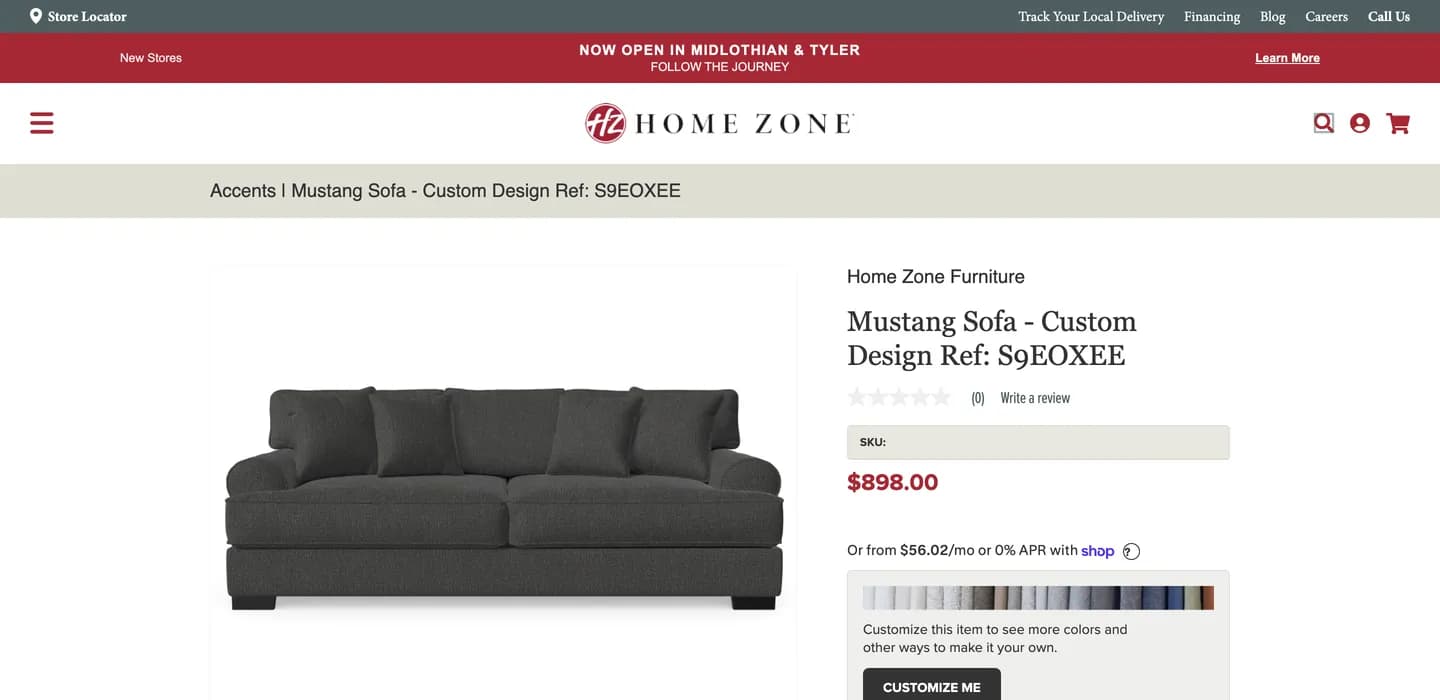
When Site Search Misses Natural Language
High-consideration queries
Content is not AI-ready
Hallucination risk
Ops cannot maintain another silo
Measurement is fuzzy
Performance budgets
Content Audit, Retrieval, UX, Evaluation
Intent and corpus review
Retrieval architecture
Experience design
Eval and rollout
RAG development
Shopify technology
Agentic commerce
You can count on us.
Firm Price
The price we quote for a scope of work is the price you pay. No surprises.
Detailed Plan
Visual and written plans make clear the scope of work and guide the project to success.
Steady Cadence
Progress and working decisions arrive on an agreed, dependable rhythm.
Prompt Communication
Questions and issues are acknowledged promptly, with clear ownership and next steps.
Frequently Asked Questions
What is AI conversational search on a storefront?
Conversational search lets shoppers ask product questions in natural language and get answers grounded in your catalog, specs, and content. Recommendations route to purchasable products instead of generic chatbot replies.
How is this different from RAG for internal teams?
This page covers shopper-facing discovery on your storefront. RAG development covers internal manuals, policies, and staff assistants. Both use retrieval and evaluation, but audiences, corpora, and conversion metrics differ.
How do you keep answers accurate?
We define what correct means for your catalog, instrument citations or product links, and maintain evaluation sets of real shopper questions. Golden questions, regression checks, and staged rollout catch hallucinations before they reach buyers.
Where does the content come from?
Answers should pull from the CMS, PIM, and commerce systems you already own. We chunk, tag, and refresh that corpus so merchandising and editorial teams are not maintaining a separate AI silo.
What does a first phase look like?
A discovery sprint or MVP assistant scopes a corpus, UI pattern, and evaluation harness against one metric such as conversion on recommended sessions or support deflection. Scale and cost tuning follow once quality is proven.
The People Leading Your Work
 Gabriel RichardsFounder and CEOSince 2000
 Roberto OlmosChief Technology OfficerSince 2004
 Cheyne PhillipsChief Operating OfficerSince 2014
 Jonathan AndersonChief Solutions OfficerSince 2017
Guides from Our Engineers

Best AI shopping assistant platforms for product catalogs 2026
 Gabriel Richards
Prompt-Based Product Discovery Demo Using MCP
Gabriel Richards
Endertech MCP 101 Webinar - How does MCP relate to ChatGPT, Claude, Grok, etc...
Gabriel Richards

- 4.8 / 534 Clutch reviews
- Since 2000experience that compounds
- 300+clients served