Skip to content
Ecommerce Development

Commerce Built for Revenue and Operations

Shopify is our primary platform for new stores, migrations, and omnichannel programs. When catalog rules, integrations, or workflows need more control, we engineer custom ecommerce platforms your team can operate.

Introducing Rapora

Turn conversations into customers.

Rapora is an in-store sales app for Shopify merchants that helps associates sell more.
When Ecommerce Help Fits

When the storefront has to match how you sell and fulfill.

We work with retailers and brands whose commerce stack affects showroom, warehouse, marketing, and customer service—not just the checkout page.

Platform migration

Moving from Magento, SFCC, WooCommerce, nopCommerce, or other suites to Shopify with catalog and SEO continuity.

Omnichannel furniture

Shopify plus STORIS or ERP when showrooms, delivery zones, and inventory truth have to stay aligned.

Headless storefronts

Hydrogen and custom frontends when performance, UX, or merchandising freedom matters more than theme limits.

Complex catalogs

Attributes, bundles, fitment, and pricing rules that do not map cleanly to default platform templates.

Search and discovery

Conversational search and guided discovery tuned to how buyers ask—not generic keyword matching alone.

Custom commerce platforms

When Shopify is not the right core, we build maintainable ecommerce systems around your operational rules.
Shopify-First Delivery

Senior-led ecommerce engineering—not theme tweaks.

Strategy, UX, integrations, data migration, and launch discipline from teams who have carried catalog complexity through cutover.
bp client logo
brandjump client logo
coco client logo
conduit client logo
cpesr client logo
current client logo
csun client logo
fhf client logo
hdb client logo
isc client logo
bp client logo
brandjump client logo
coco client logo
conduit client logo
cpesr client logo
current client logo
csun client logo
fhf client logo
hdb client logo
isc client logo

Platform fit before build

Shopify, Hydrogen, or custom—chosen against catalog, ERP, and team workflows—not vendor habit.

Integrations that operations trust

STORIS, OMS, tax, and marketing seams with reconciliation and monitoring—not launch-day-only scripts.

Accountable through launch

Hypercare, metrics review, and a clear owner after go-live—not a handoff to a ticket queue.
How We De-Risk Commerce

Plan catalog truth, integrations, and cutover before traffic moves.

The expensive mistakes in ecommerce are usually made early—data mapping, SEO, and operational rehearsal—not in theme selection.

Inventory the entities

Catalog, customers, orders, pricing, and integrations—with acceptance criteria per object.

Rehearse on realistic data

Fulfillment, customer service, and marketing dry runs before the production switch.

Protect SEO continuity

Redirects, sitemaps, and structured data planned with the migration—not patched after launch.

Define cutover ownership

Freeze windows, comms, on-call, and rollback triggers with named owners.
Ecommerce Solutions

Programs we run most often for retailers and brands.

Each path below is a dedicated solution page with scope, fit, and how we work together.

Furniture omnichannel

Showroom, delivery, and digital commerce for furniture retailers on Shopify and STORIS.

Platform migrations

Magento, SFCC, WooCommerce, nopCommerce, and other suites to Shopify—with phased cutover.

STORIS + Shopify

Inventory, orders, and catalog sync between STORIS and Shopify with operational monitoring.

Shopify Hydrogen

Headless storefronts on React and Remix with Storefront API and Oxygen deployment patterns.

AI conversational search

Discovery experiences tuned to how buyers ask questions across complex catalogs.

Shopify technology

How we build on Shopify—integrations, migrations, Hydrogen, and ongoing optimization.
Relevant Work

Ecommerce programs selected for operational complexity.

Shopify migrations, STORIS integrations, and custom platforms where catalog and fulfillment reality shaped the build.
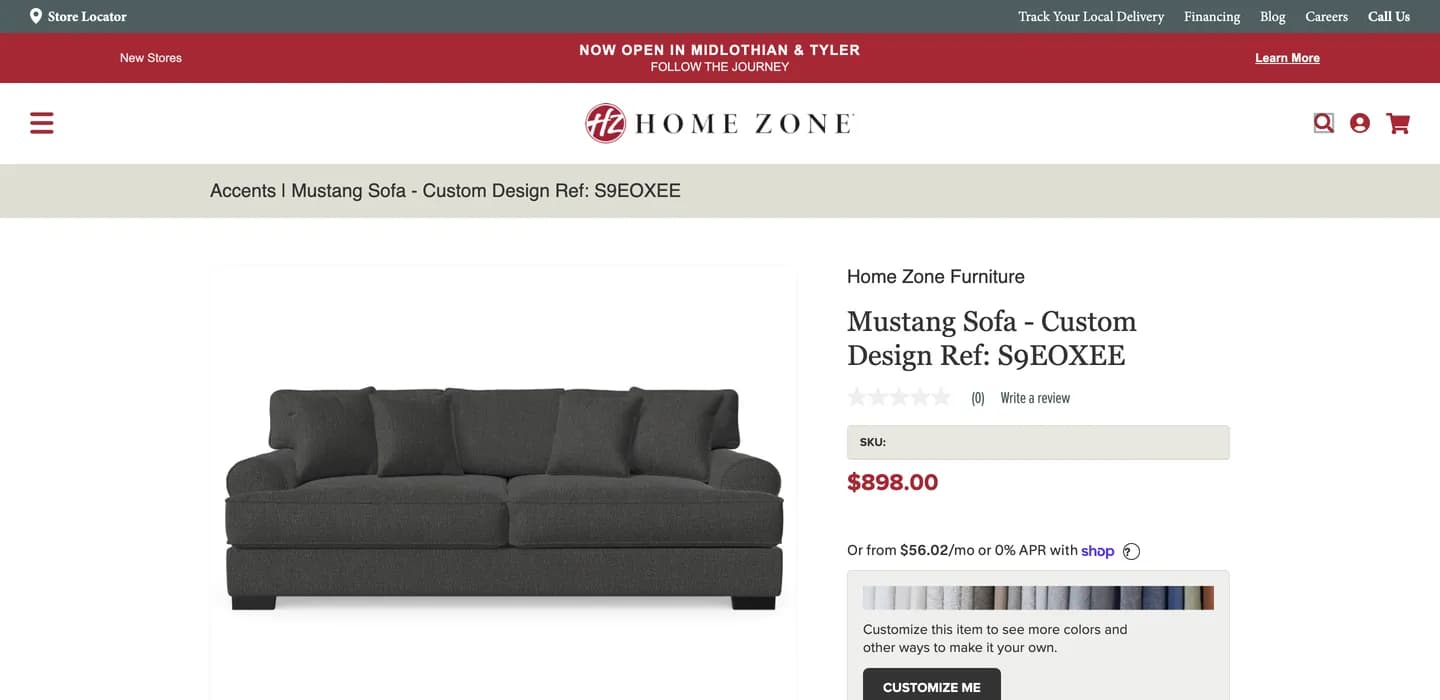
Home Zone Furniture: Migrating from NopCommerce to Shopify with Integrated STORIS Inventory
Furniture Retail - Ecommerce

Home Zone Furniture: Migrating from NopCommerce to Shopify with Integrated STORIS Inventory

Endertech partnered with Home Zone Furniture, a Texas-based furniture retailer, to migrate from a legacy nopCommerce/eSTORIS setup to Shopify. By integrating STORIS for inventory and orders, re-architecting the catalog around variants, and modernizing UX and marketing integrations, we helped the client gain better control over their ecommerce channel and support broader, nationwide sales.
Ways to Work Together

Scoped for the risk you need to remove.

Own the full program or bring us in for the highest-risk workstreams—migration, integrations, or launch hypercare.

Commerce discovery

Platform fit, integration map, and phased roadmap before major build spend.

Build and migrate

Storefront, data, and integrations as one accountable delivery team.

Launch hypercare

Dedicated response after go-live with daily metrics and issue triage.

Ongoing optimization

Performance, search, merchandising, and integration improvements once stable.
Ecommerce FAQ

Ecommerce development questions

Straight answers on platforms, migrations, integrations, and how we work with Shopify-first programs.

Ecommerce services

Platform choice, migrations, and omnichannel delivery.

What ecommerce platforms does Endertech work with?
Shopify is our primary commerce platform for new builds, migrations, and ongoing optimization. We also build and maintain custom ecommerce platforms when catalog rules, integrations, or operational workflows require more control than a standard SaaS storefront allows. Platform choice depends on catalog complexity, ERP or STORIS requirements, headless needs, and how your team wants to operate day to day. See Shopify development and platform migrations.
When should we migrate to Shopify versus extend what we have?
Migration makes sense when platform limits, vendor sunset, total cost of ownership, or operational friction exceed the cost of a planned move. Extension can still be right when the current stack is stable, integrations are healthy, and the roadmap does not require capabilities the platform cannot deliver. We start with an honest readiness review—data, SEO, integrations, and cutover risk—before recommending replatforming.
How do you handle STORIS, ERP, and omnichannel integrations?
Furniture and multi-location retailers often need STORIS or ERP truth alongside Shopify for the customer-facing storefront. We design middleware, reconciliation, and monitoring so inventory, orders, and catalog changes stay aligned. Integrations are scoped with clear ownership, error handling, and operational runbooks—not one-off scripts that only work on launch day.
What does a typical ecommerce engagement include?
Engagements usually combine discovery, solution design, storefront and integration build, quality assurance on realistic data, launch support, and a hypercare window after cutover. Scope varies: a focused migration workstream, a new Shopify build with STORIS, or headless Hydrogen when storefront freedom matters. We phase work so revenue-critical paths are validated before broader rollout.
Can you improve search and discovery on an existing store?
Yes. Conversational and AI-assisted search can be added to Shopify and custom storefronts when catalog data, merchandising rules, and evaluation criteria are in place. Search improvements are most durable when tied to how buyers actually ask questions—not bolted on as a generic chat widget.
Start With the Store

Have a commerce initiative that needs honest scoping?

Share your platform, catalog constraints, and integration map. We will help frame a sensible first phase and the tradeoffs behind it.