


Search Results

Why Ecommerce Middleware Tests Should Follow Data Domains, Not Task Inheritance
As ecommerce integrations grow beyond products and orders, test setup needs to recognize the data being synchronized. A data-domain approach helps middleware teams add new workflows without inheriting assumptions from unrelated task types.

How to Make Plans and Packages Easier to Compare
Buyers need clear plan and package choices at the moment they decide. Structured purchase-option data and reusable selection cards present material and plan differences consistently across registration and payment-update flows.
Symfony CMF vs WordPress CMS
WordPress is well-known the world over for its relative ease-of-use and plug-and-go capabilities. Businesses of all shapes and sizes use this content management system for all sorts of websites, from content sites to lead generation to e-commerce or even social networks.
The Truth About Magento and Entity-Attribute-Value
Magento is a serious e-commerce solution, built from the ground up for the kind of business logic that e-tailers use day in and day out. Magento is structured as an infinitely flexible shopping cart and product management system.
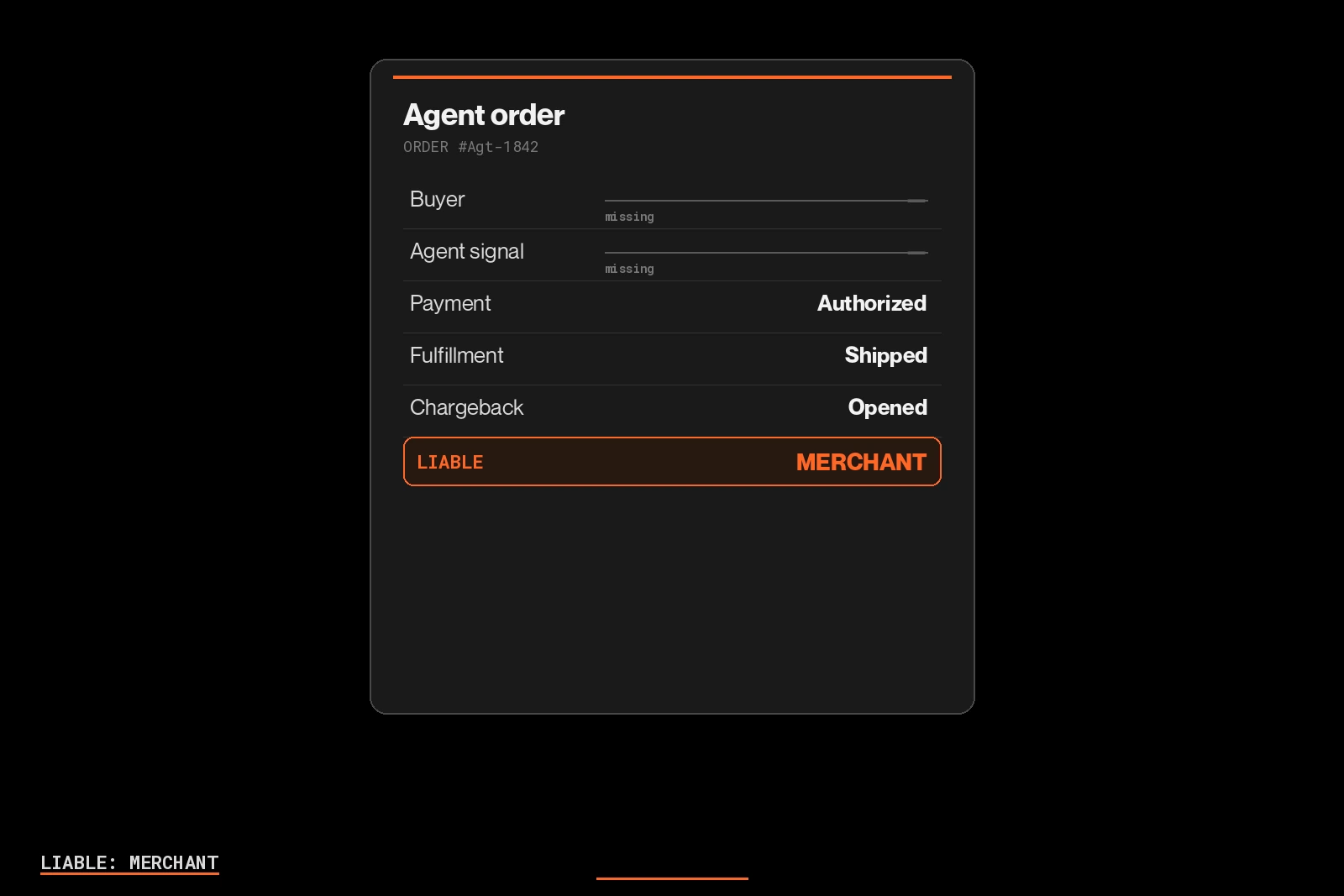
Who Pays for Fraud When an AI Agent Places the Order?
When an AI agent buys for a shopper, the merchant still carries most fraud risk and loses the device and behavior signals fraud tools rely on. Here's who is liable, how detection has to change, and how card networks, Stripe, Google and Shopify are rebuilding fraud controls for agent orders.
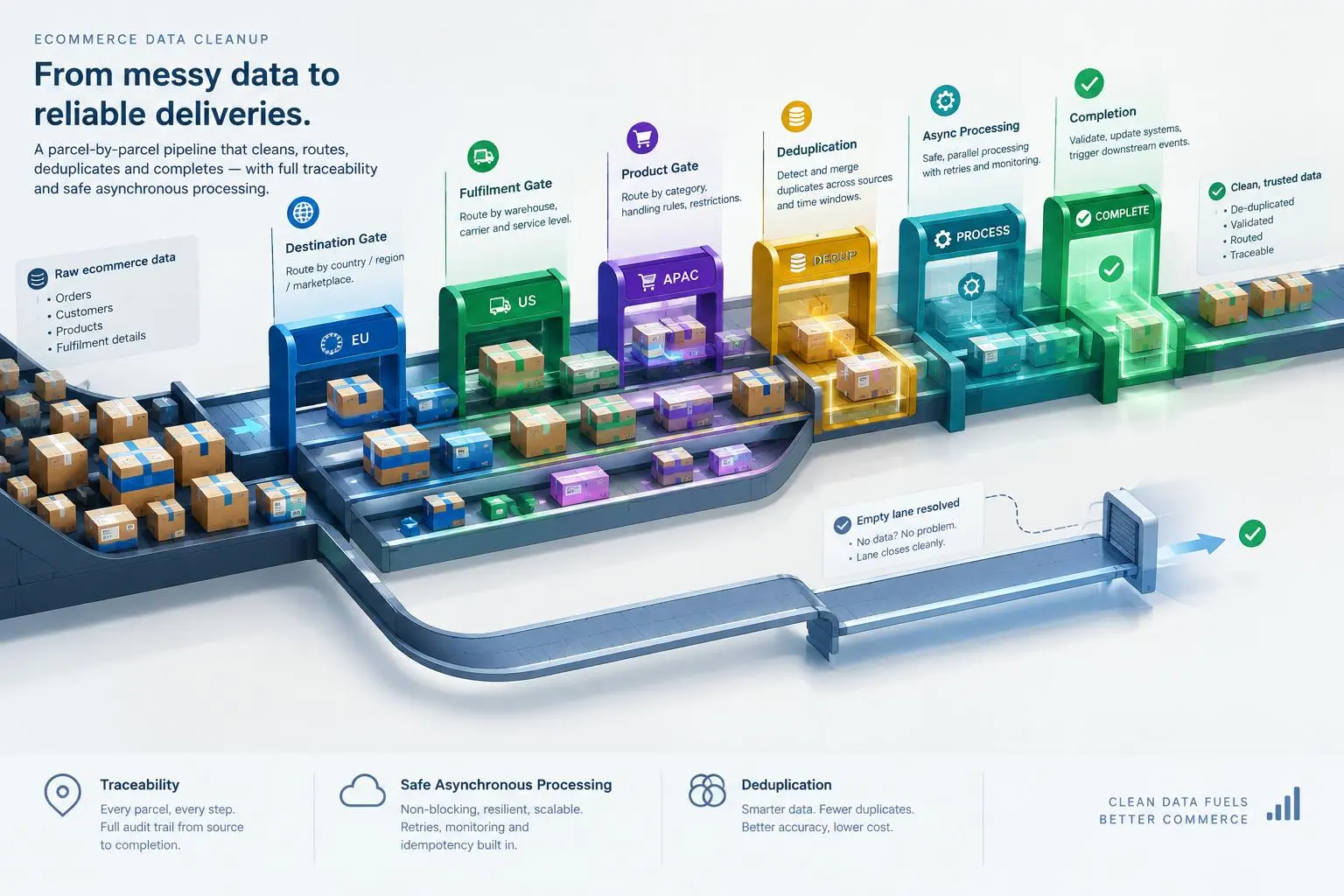
How to Design Safe Chunked Cleanup Jobs for Ecommerce Data
Large stale-identifier cleanup jobs need a clear identity, destination-specific request sizing, and intentional completion behavior. These patterns make asynchronous ecommerce maintenance work easier to trace and safer to manage.

Keeping Shopify–STORIS Order Sync Safe Through GraphQL API Changes
A reliable Shopify–STORIS integration needs more than successful API calls. This technical deep dive explains how explicit idempotency testing, version-aware order mapping, and end-to-end regression coverage protect order synchronization as upstream and downstream APIs change.

Shopify Plus vs Adobe Commerce for B2B Ecommerce
Shopify Plus wins on speed and low overhead; Adobe Commerce wins on native B2B depth. Full 2026 breakdown of features, cost models, and catalog scaling.

How Shopify Shop Metafield Objects can be Used to Show Information about your Brick and Mortar Stores
This guide shows how to centralize store details in Shopify using shop metafields (and metaobjects) and render them across your theme. Set up fields for hours, address, contact, and policies, then use Liquid snippets to keep headers, footers, and templates consistent and easy to maintain.

Shopify's 2,048 Variants Stop at 250 in Liquid: A Furniture Guide
A summary of the variant-limit segment of Unofficial Shopify Podcast #592, checked against Shopify's changelog and theme docs, with practical guidance on modeling furniture fabric, size and finish options.

The Logo Comes Last: Developing an Effective Brand Identity
My design team and I recently had the exciting opportunity to develop the brand identity for a new product from scratch. When our client, Global Electronic Technology, approached us with this project, their new product didn’t even have a name yet.
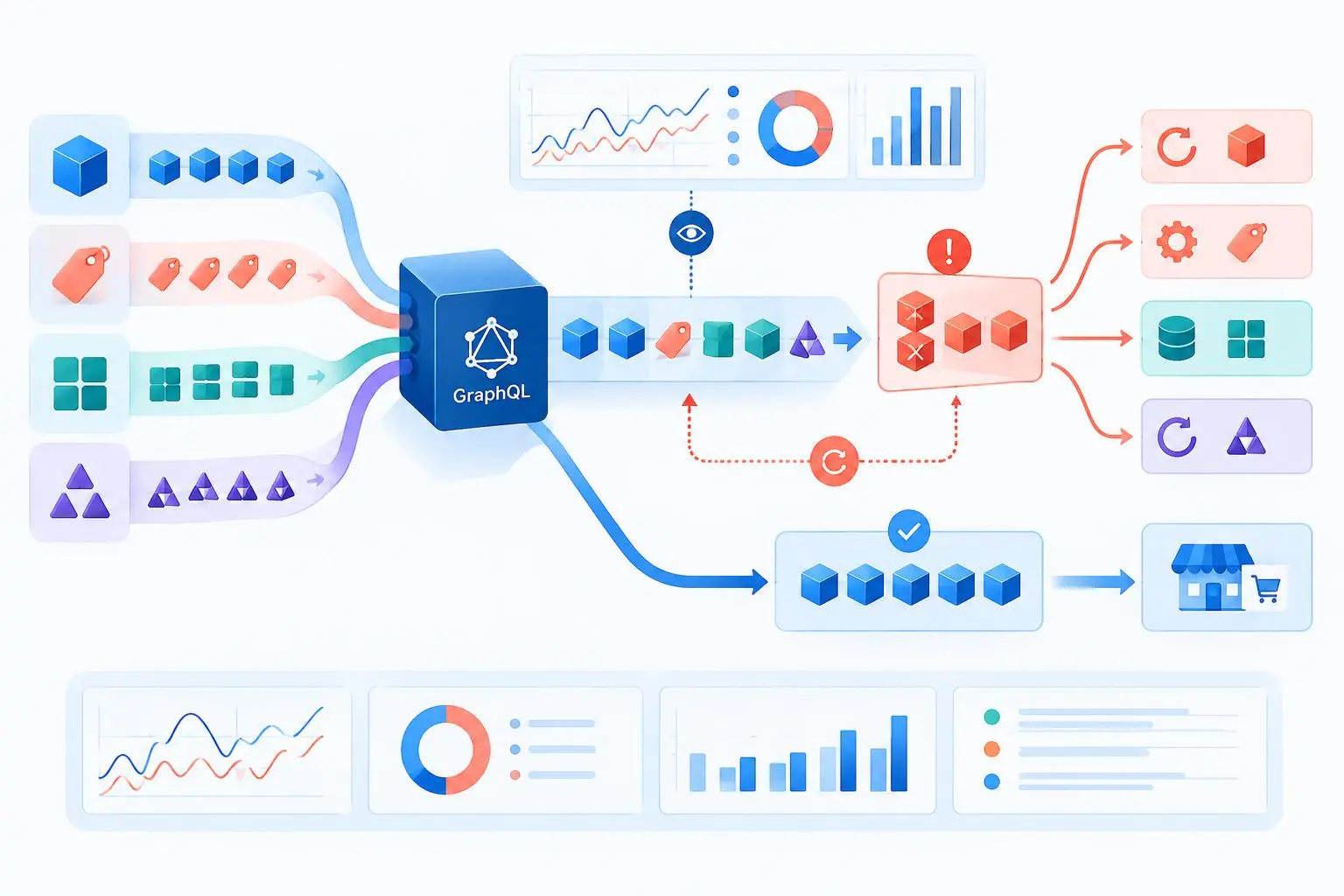
Designing Recoverable Shopify Syncs: From Failed Batches to Targeted Retries
Reliable Shopify integrations need more than background jobs and retries. This article explains how object-level recovery messages, safe GraphQL slicing, and focused test coverage make inventory, metafield, and variant synchronization easier to diagnose and recover.