


E-Commerce & Shopify Strategy Articles
E-Commerce
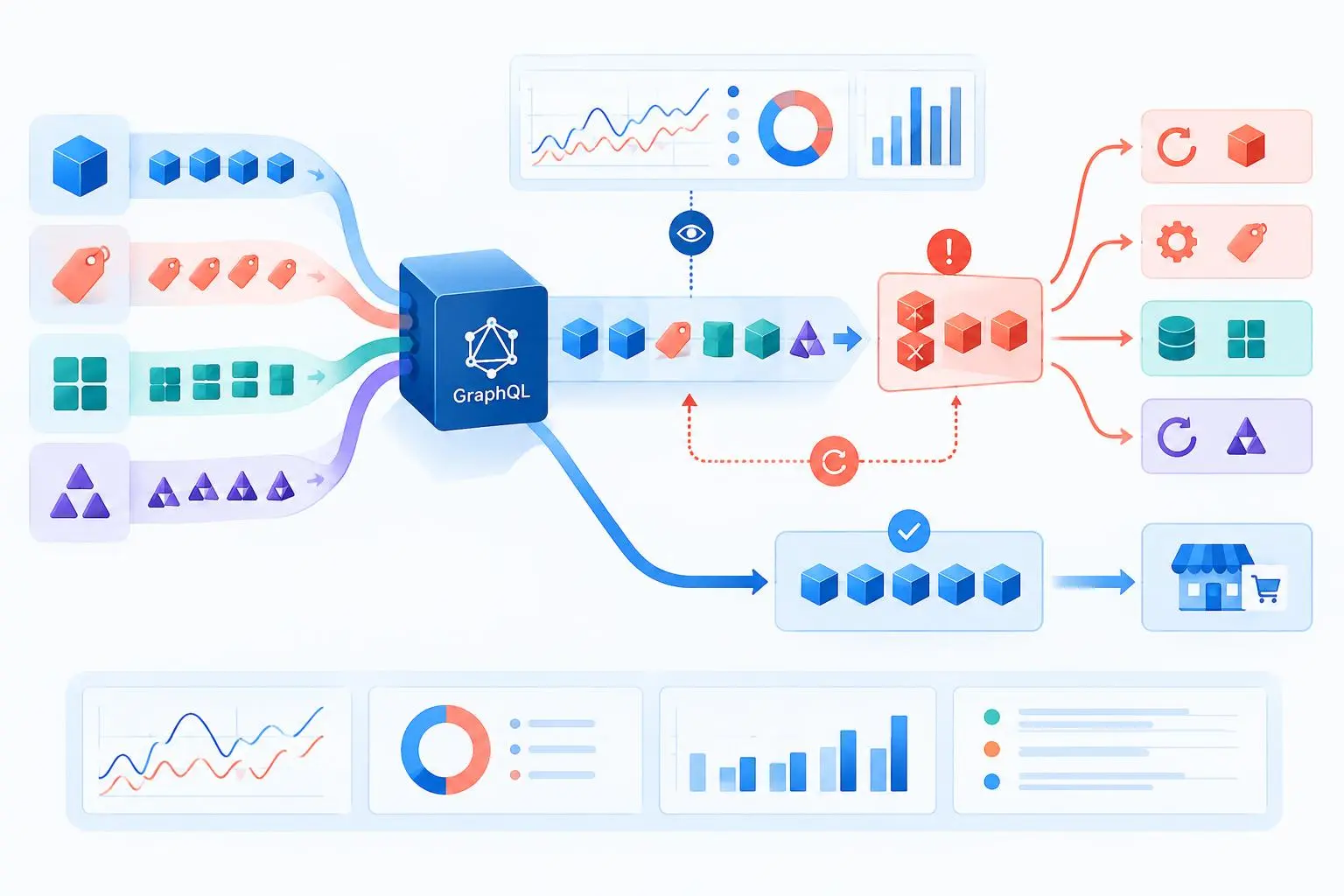
Designing Recoverable Shopify Syncs: From Failed Batches to Targeted Retries
 Willem Luijt
Reliable Shopify integrations need more than background jobs and retries. This article explains how object-level recovery messages, safe GraphQL slicing, and focused test coverage make inventory, metafield, and variant synchronization easier to diagnose and recover.

Green Scans Aren’t Enough: What Expert Accessibility Audits Catch That Tools Miss
 Gabriel Richards
Automated WCAG scanners can go green while screen-reader shoppers still hit dead ends. Here’s how an expert Converge Accessibility WCAG 2.2 audit—paired with remediation on Hydrogen storefronts—surfaces what SortSite, axe, and Lighthouse miss, and how to triage vendor-owned gaps.

Inventory-Aware Shopify Sync: Making “Available to Try” Location Data More Reliable
A Symfony-based ecommerce middleware enhancement uses both STORIS condition codes and positive on-hand inventory to publish reliable “Available to Try” location IDs to Shopify variant metafields.

Keeping Shopify Checkout QA Reliable When the Platform Changes Underneath You
Willem LuijtShopify checkout is a moving dependency. This project shows how resilient end-to-end browser tests can absorb interface changes—such as consent overlays and new required fields—without weakening validation of the shipping logic customers rely on.

Migrate Magento to Shopify Without Losing SEO (2026)
How to migrate Magento to Shopify without losing SEO in 2026: full 301 redirect mapping, content parity, structured data, and post-launch monitoring steps.

Building GDPR Resilience Into a Multi-Tenant Shopify App
Gabriel RichardsPrivacy compliance in a multi-tenant Shopify application is not just about receiving a webhook. It requires reliable, repeatable data-erasure workflows that remain safe during concurrent database activity, merchant provisioning, and high-volume demo resets.

Magento to Shopify Migration Timeline 2026: Key Factors
Magento to Shopify migration timelines vary with catalog size, integrations, and customization — see what actually controls the schedule in 2026.

Making Shopify AI Catalog Chat Safer Without Losing Merchant Visibility
 Thom Zolghadr
Public AI shopping assistants need protection from automated abuse, but blunt security controls can hide useful operational signals. This architecture combines server-side risk verification, configurable tenant controls, and per-turn reporting for safer Shopify catalog chat.

How Bounded Failure Handling Keeps Ecommerce Order Middleware Moving
Willem LuijtA resilient ecommerce integration should not retry impossible order failures forever. This implementation detects persistent delivery or pickup location errors, waits for a one-day threshold, and moves affected middleware orders into an auditable terminal state.

Auto Parts Ecommerce Website Design: 2026 Guide
Ecommerce website design for auto parts retailers in 2026: fitment data, YMM search, platform picks, and integration steps that cut wrong-part returns.

Verifiable Tenant Provisioning for AI Commerce: Beyond “Deployment Succeeded”
Gabriel RichardsA successful configuration upsert does not prove that an AI commerce tenant is truly ready. This article explains how deployment manifests, safe secret reporting, and remote verification create a trustworthy provisioning workflow for Shopify catalog chat.

Keeping Shopify–STORIS Order Sync Safe Through GraphQL API Changes
Willem LuijtA reliable Shopify–STORIS integration needs more than successful API calls. This technical deep dive explains how explicit idempotency testing, version-aware order mapping, and end-to-end regression coverage protect order synchronization as upstream and downstream APIs change.