


Custom Shopify App Development
What a custom Shopify app is
A custom Shopify app is software built for your store or business that adds features Shopify does not include out of the box or connects your store to other systems. It talks to Shopify through its APIs and runs its own backend. It can add screens to the Shopify admin, tools to Point of Sale, and logic to checkout. A custom app serves one store or the stores in one Shopify organization. A public app is listed on the Shopify App Store and serves many merchants. We build both, and we start by checking whether an existing app already does the job.
What we build
Admin tools and workflows.
Quote, store picker and configurator tools.
POS UI extensions.
Checkout extensions and Functions.
ERP and inventory middleware.
Public apps for the Shopify App Store.
App or custom build?
An app is usually right when
Custom is usually right when
Whichever route you choose, we review the apps already on your store. Old apps leave scripts behind, and a short cleanup often improves speed before any new development begins.
Rapora: a public Shopify app we built and run
Rapora: In-Store Selling Tool is listed on the Shopify App Store with Endertech as the developer. It turns a tablet into a showroom selling tool, so associates can explore products with a shopper, capture preferences, build carts and draft orders, send quotes, and track follow-up. Carts finish in Shopify POS or online checkout, and managers see performance by associate and location. It works with Shopify POS.
Behind the listing is a multi-tenant app. The embedded Admin app handles sessions, billing, and webhooks on the server, and Hydrogen powers the associate workflows. We wrote up the hard parts, including billing reconciliation, privacy webhooks and customer data redaction.
Custom builds behind our client stores
American Freight.
Berríos Furniture.
Terra Outdoor Living.
How we build an app
Scope in writing.
Build on staging.
Test with real conditions.
Launch with a plan.
Document and hand over.
The tools we work with
On Shopify we work in Liquid and JavaScript, with TypeScript and React for apps and headless storefronts. We use Shopify's Admin and Storefront APIs, webhooks, checkout extensions, and Functions. Middleware between Shopify and an ERP runs as its own service with logging, retries, and alerts, so your team can see what moved and what failed. We connect Shopify to the marketing tools you already use, including email platforms such as Klaviyo and analytics and advertising tags, and we check that events fire correctly after every release. Where a tool outside this list fits your project better, we say so and explain why.
From our engineers

Shopify POS App Development: Extensions, Middleware or Web App (2026)
 Gabriel Richards
How to Deploy Shopify Apps vs Shopify App Extensions
Gabriel Richards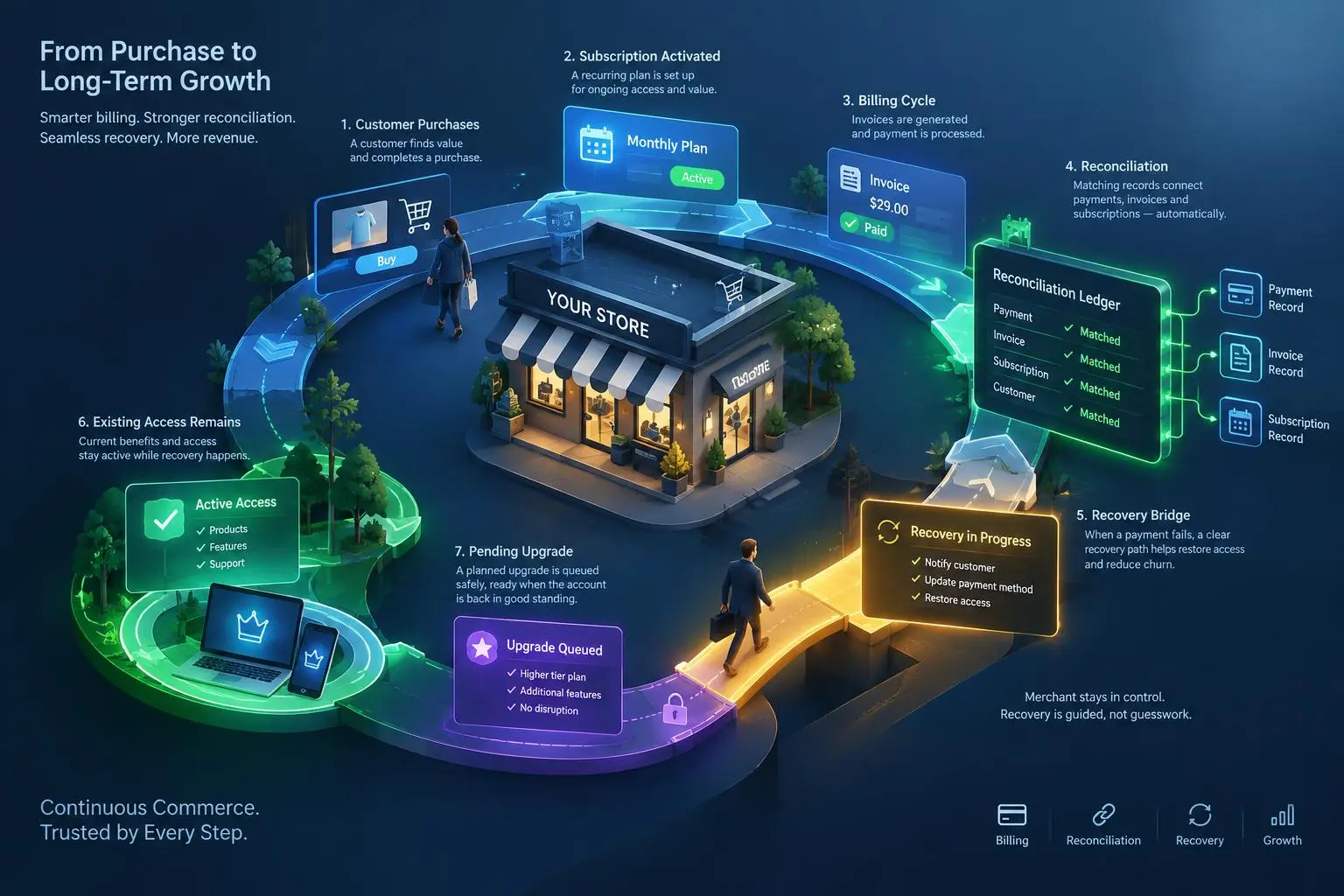
Shopify App Billing: How to Prevent Repeated Approval and Plan-Selection Loops
Gabriel RichardsBuilding a Shopify Carrier Service App
 Roberto Olmos

Architecting Custom Order Pages in Shopify Using Customer Account UI Extensions

A Guide to Shopify Checkout Extensions & the Payments Platform
Shopify app development questions
What is the difference between a custom app and a public app?
A custom app is built for one store or for the stores in one Shopify organization, and you cannot share it with other merchants. A public app is listed on the Shopify App Store, goes through Shopify's review, and serves many merchants with billing and onboarding built in. We build both.
Can I create a custom app in the Shopify admin?
Not any more. Since January 1, 2026, new custom apps are created in the Shopify Dev Dashboard, and custom apps created in the admin before that date keep working and can still be managed from the admin, and some have moved to the Dev Dashboard. The old "private app" term refers to that earlier approach. We build on the current model.
How much does it cost to develop a Shopify app?
Cost follows the number of workflows, the systems the app connects to, whether it needs billing and a public listing, and how much of the design is already documented. We scope after a short discovery pass and quote in phases, so you can stop, continue, or expand with a written plan at each gate.
How long does Shopify app development take?
A focused custom app for one workflow can reach a first release in weeks. An app with ERP sync, billing, and a public listing takes longer. We release in small steps so the most valuable piece is in use early.
Should I build a custom app or use one from the App Store?
Use an app when the feature is common and a maintained app does it well. Build custom when the feature carries your business rules, touches your ERP, or would require several apps that slow the store. We review your needs and tell you which route fits, even when the answer is an existing app.
Can you build Shopify POS or checkout extensions?
Yes. We build POS UI extensions for associate workflows, checkout UI extensions, and Shopify Functions for discount, shipping, and payment logic. We test them against your payment methods and staff workflows before launch.
Who owns the code and who hosts the app?
Code we build for your store is yours. We deliver it to your repository with documentation, and we write hosting and ownership terms into the project agreement. Many clients keep us on for monitoring and updates.
Can you fix or take over an app or integration we already have?
Yes. We start with a review of the code, the permissions, the webhooks, and the failure handling, then fix or extend what is there. Not every project is a rebuild.
Looking for a Shopify agency for the whole store?
Apps are one part of a Shopify program. For themes, Shopify Plus, migrations, ERP and POS work, and ongoing support, see our Shopify agency page.