


Search Results

Inventory-Aware Shopify Sync: Making “Available to Try” Location Data More Reliable
A Symfony-based ecommerce middleware enhancement uses both STORIS condition codes and positive on-hand inventory to publish reliable “Available to Try” location IDs to Shopify variant metafields.

How to Prevent Translation Gaps in Multi-Person Enrollment Forms
A localized multi-person enrollment flow must account for every person-specific form path. Learn why supplemental dependent fields can miss translations and how to review Symfony translation domains without touching eligibility logic.

Isolate Shared State Before Adding Parallel Test Workers
Parallel test runs break on shared state, not CPU count. Here is how we isolated databases, temp files, locks, and reports in a Symfony coverage run, locked only the truly shared fixtures, and merged coverage without hiding failures.

The Power of API Platform Operations
Discover the power of design first approach with API's and configurations for API Platform Operations to customize and complete your HTTP requests.
How Symfony1.4 Provides a Route to a Better URL
An explanation of how a Uniform Resource Locator ("URL") is affected by the Symfony1.4 framework including a discussion of route patterns, request URL translation and URL creation via Symfony1.4.
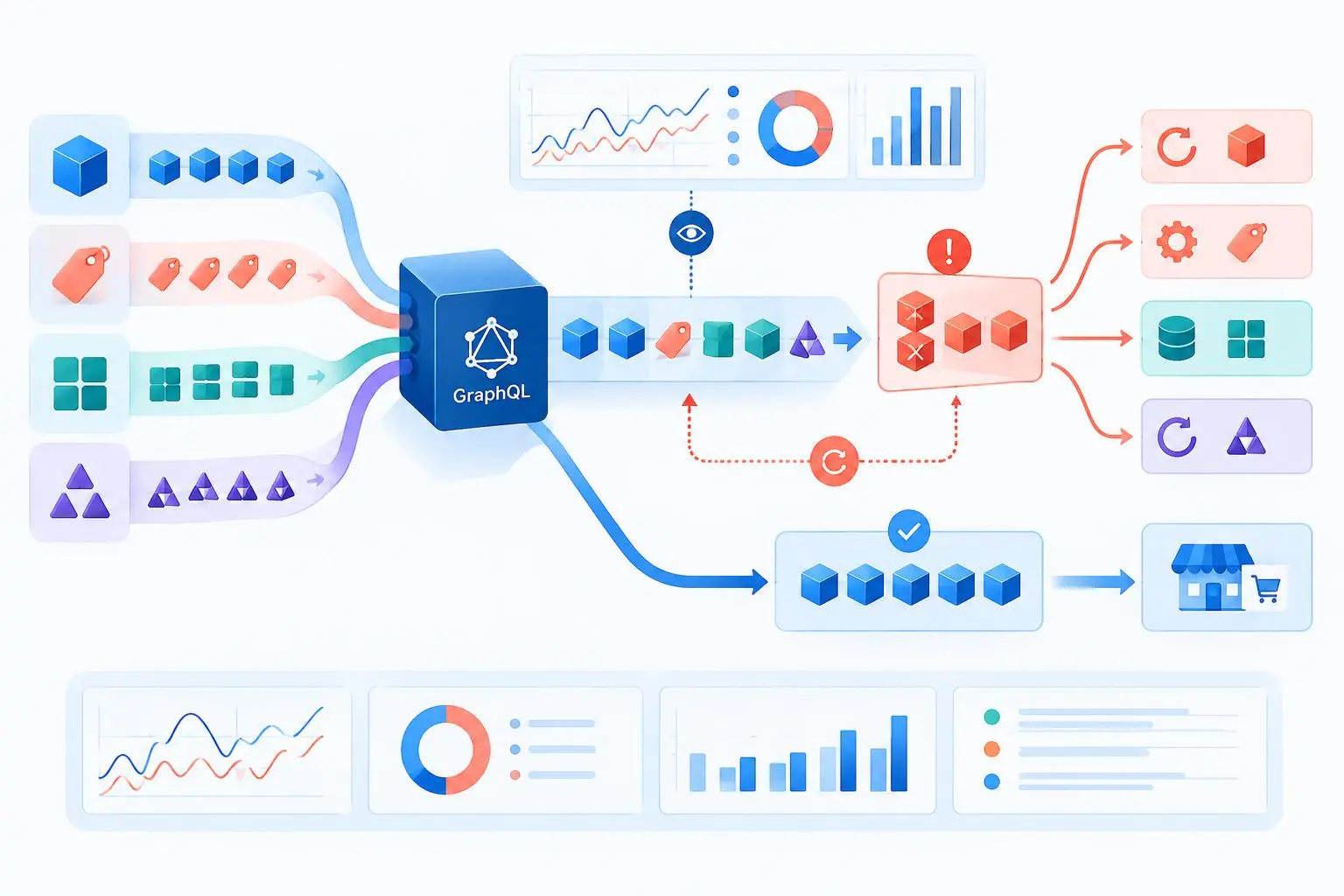
Designing Recoverable Shopify Syncs: From Failed Batches to Targeted Retries
Reliable Shopify integrations need more than background jobs and retries. This article explains how object-level recovery messages, safe GraphQL slicing, and focused test coverage make inventory, metafield, and variant synchronization easier to diagnose and recover.

October CMS and Database-driven Components
October CMS is a Symfony based platform that’s surprisingly easy to work with. Here’s a software developer’s insight.

How Bounded Failure Handling Keeps Ecommerce Order Middleware Moving
A resilient ecommerce integration should not retry impossible order failures forever. This implementation detects persistent delivery or pickup location errors, waits for a one-day threshold, and moves affected middleware orders into an auditable terminal state.

API Platform max_joins Errors: Fix the Serializer Cycle, Not the Limit
An API Platform max_joins error can signal a recursive serializer graph. Learn how one vehicle-fitment API removed a targeted back-reference, preserved storefront data, and added a regression test.

How We Built an Autonomous Content Pipeline With a Human Publication Gate
Autonomy without a publication gate is just faster noise. Here is how we designed discover → summarize → generate as agent-runnable stages in Ansible, while keeping draft, pin, and publish as explicit human decisions.

Governing AI Planning and Code Execution With Branches, Draft Merge Requests, and Audit Records
AI agents that plan work and propose code need the same gates content pipelines do. Here is how we encode governance in branches, draft merge requests, and audit records, while humans keep merge and publish.

Generating Proposals With Approved Evidence and Deterministic Pricing
AI can write a proposal in seconds. The hard part is making sure every price came from an approved rule and every claim came from curated evidence. Here is how we built a proposal workflow where the model writes and code owns the commitments.